How App Developers Can Build Sustainable Engagement Loops

When eFootball celebrated its 900 million download milestone, much of the spotlight fell on flashy rewards and player giveaways. Yet for developers and product managers, the real achievement lies in the LiveOps architecture behind the campaign. The update is a carefully engineered system that sustained engagement, optimized monetization, and reinforced community loyalty.
The mobile gaming industry has experienced significant growth, becoming a dominant force due to the convenience of smartphones and tablets, making the longevity is the ultimate design challenge. eFootball ’s approach offers a blueprint for developers seeking to future-proof their titles.
The Evolution of LiveOps in Mobile Games
LiveOps, short for Live Operations, refers to the continuous release of events, updates, and campaigns designed to keep players engaged beyond the launch cycle. A decade ago, this meant occasional patches or seasonal rewards. Today, it is the core growth driver for most free-to-play games.
Newzoo's 2024 survey on top-grossing mobile games shows that 68% of these titles attribute their ongoing revenue primarily to LiveOps (live operations), which includes updates, events, and ongoing support, rather than focusing solely on new player acquisition.
eFootball demonstrates how LiveOps has matured into a sophisticated ecosystem where every element, from daily challenges to new skills is deliberately designed for behavioral impact.
Breaking Down eFootball’s LiveOps Formula
1. Event Cadence and Pacing

The 900M Downloads Campaign wasn’t a one-off burst of rewards. It spanned three weeks, with layered daily login bonuses, objectives, and PvP milestones. This staggered pacing created a rhythm that pulled players back each day, reinforcing habit formation.
For developers, the lesson is to treat events as ongoing arcs rather than isolated moments. Effective cadence ensures that engagement doesn’t spike and crash but builds and sustains momentum.
2. Systemic Engagement Loops
Every LiveOps feature connected to broader progression systems:
● Login bonuses fed into PvP stamina.
● PvP victories unlocked milestone packs.
● Packs tied back into character upgrades.
This closed-loop design ensures no feature exists in isolation. According to FoxData, games with fully integrated LiveOps loops see 35% higher median session times compared to games where events are disconnected add-ons.
3. New Mechanics as Retention Triggers
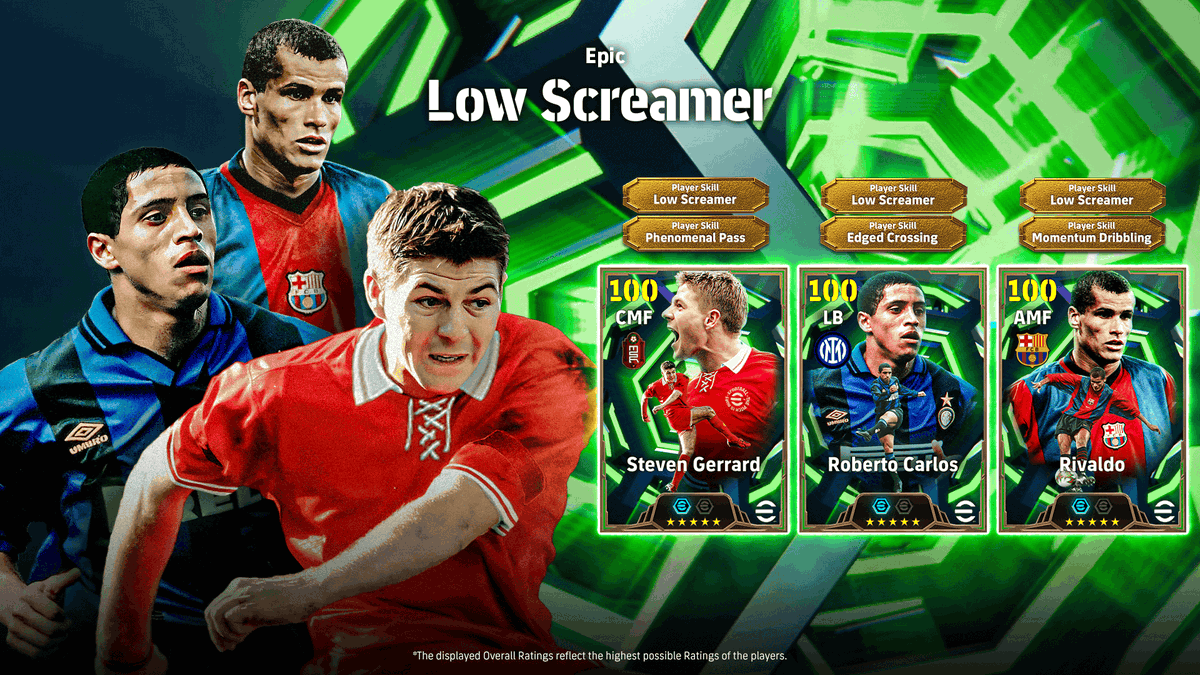
The debut of the “Low Screamer” skill during the campaign wasn’t just fan service; it was a retention strategy. Introducing new mechanics at milestone moments encourages both lapsed and core players to re-engage, experiment, and adapt their playstyles.
For product managers, this highlights the power of innovation as engagement fuel. Regularly injecting mechanics, whether skills, maps, or narrative arcs, ensures the game evolves alongside its community.
4. Thematic Cohesion with Community Identity
By tying rewards and events to the symbolic “9” milestone and spotlighting football legends, Konami created resonance with football’s cultural heritage. Thematic cohesion transforms mechanical updates into emotional touchpoints, deepening the bond between player and product.
Challenges Developers Must Anticipate
While eFootball sets a gold standard, replicating its success is not without challenges:
● Resource intensity: Maintaining continuous LiveOps requires cross-functional teams spanning design, analytics, art, and community management. Smaller studios may struggle to scale this sustainably.
● Content fatigue: Players can tire if event cadence is too aggressive. Balancing novelty with downtime is critical to prevent burnout.
● Monetization ethics: Event-driven monetization risks veering into pay-to-win mechanics. Developers must align revenue goals with fair play to maintain trust.
The Future of LiveOps: 2026 and Beyond
Looking ahead, LiveOps will evolve in several important ways:
AI-Driven Personalization
By 2026, predictive analytics using tools like FoxData, will allow developers to serve personalized event structures, tailoring rewards, difficulty, and pacing to individual behavior. This will reduce churn and improve lifetime value.
Cross-Media Integrations
Expect LiveOps campaigns to connect with real-world sports seasons, AR fan experiences, or even fantasy leagues. The boundary between game and fandom will blur further.
Community-Led Events
Crowdsourced content and fan-driven competitions will become mainstream, turning players into co-creators of the LiveOps ecosystem.
Practical Lessons for Developers
For studios and product managers seeking to replicate eFootball’s success, the key takeaways are:
● Design for systems, not silos. Every event should feed into core gameplay loops.
● Balance cadence with capacity. Plan sustainable event pipelines that align with studio resources.
● Anchor innovation in identity. New features resonate most when tied to community themes or cultural moments.
● Measure engagement holistically. DAU and MAU are useful, but metrics like session length, stickiness, and event participation provide clearer signals of LiveOps health.
Final Thoughts
The brilliance of eFootball’s 900M milestone campaign lies not just in its numbers but in its design discipline. For developers, it is proof that LiveOps is no longer an accessory to mobile games but it is the operating system that sustains them.
As we move into 2026, the studios that thrive will be those that treat LiveOps as a strategic design philosophy, blending data-driven systems with cultural resonance and community trust. In a world of endless competition, it is the difference between being a momentary hit and building a decade-long franchise.


